Modern construction demands speed, precision, durability, and cost-efficiency. As urbanization accelerates and developers rush to meet deadlines, traditional formwork systems like timber and steel often struggle to keep up. Modern aluminium formwork technology has emerged as a game-changer, offering unmatched speed and consistency in concrete construction—especially for high-rise residential and commercial projects. Its lightweight structure, high reusability, and precision engineering make it one of the most efficient systems used today.
This detailed article explains how modern aluminium formwork works, why it speeds up construction, its major advantages, applications, components, comparisons with other systems, and why it is becoming the preferred choice in India, UAE, Saudi Arabia, and globally.
1. Introduction: The Need for Faster, Smarter Construction
The construction industry faces intense pressure:
Shorter project timelines
Rising labour costs
Demand for uniform quality and safety
Need for sustainable, clean construction methods
Traditional formwork systems require heavy labour, frequent repairs, and longer cycle times. They often result in inconsistencies in concrete finish, leading to additional plastering, alignment corrections, or delays.
Modern aluminium formwork technology directly addresses these challenges.
It supports rapid construction cycles often enabling a 5–6 day floor cycle, which is significantly faster than timber or steel systems.
2. What Is Modern Aluminium Formwork Technology?
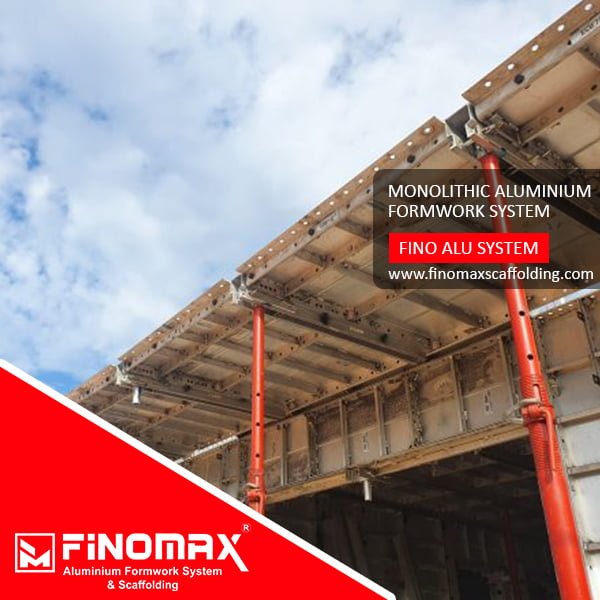
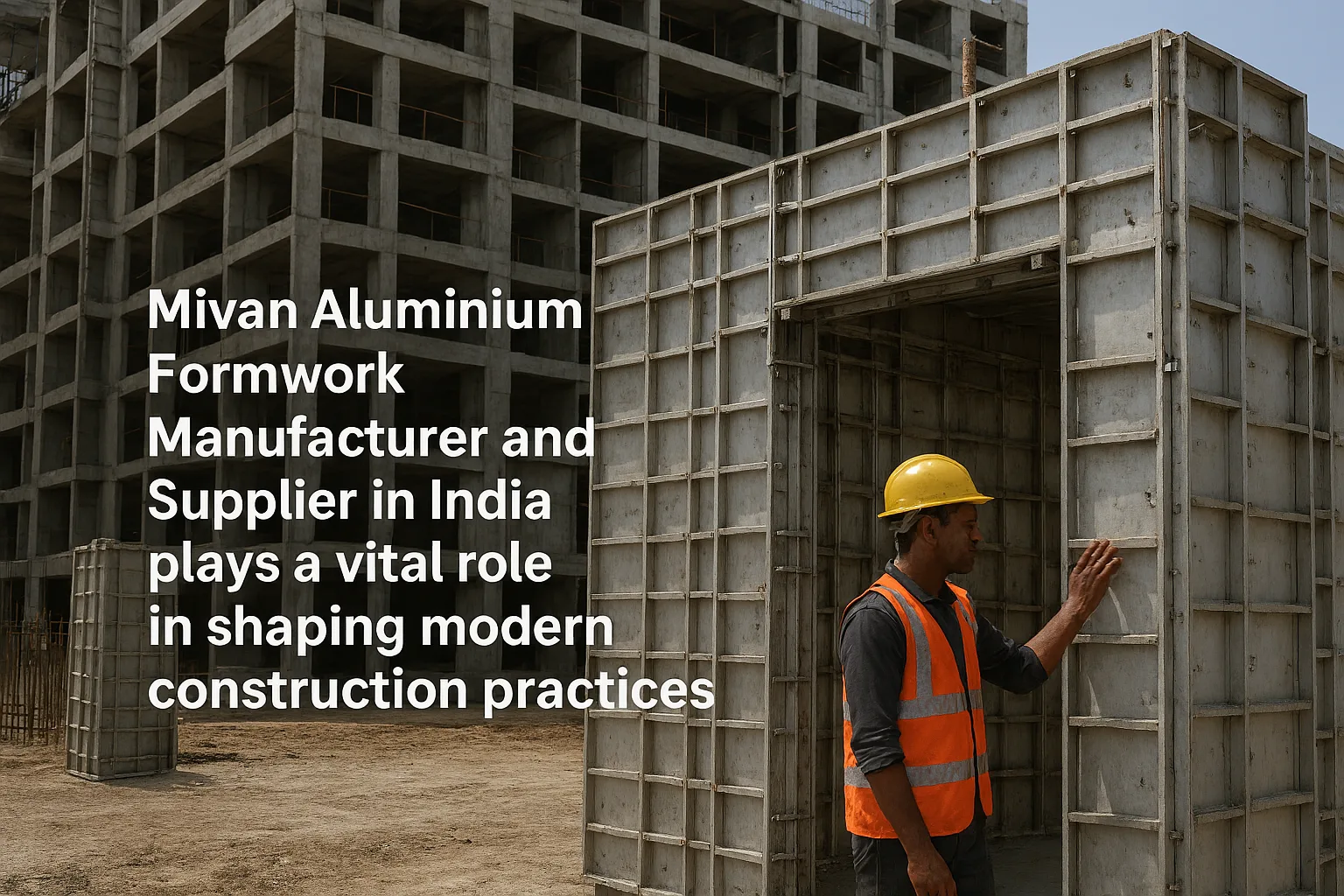
Aluminium formwork is a modular, lightweight formwork system made from high-strength aluminium alloy. It creates precise moulds into which concrete is poured to form structural elements such as:
Walls
Slabs
Columns
Beams
Staircases
Balconies
Unlike conventional materials, aluminium formwork ensures perfect alignment, smoother finishes, and repeatable precision.
Key features:
Weight typically ranges from 18–25 kg per panel
Hand-handled installation without cranes
Factory-engineered to millimetre accuracy
Over 200–300 reuses on average
Compatible for monolithic (wall + slab) construction
This monolithic capability makes the system extremely popular for mass housing and high-rise residential projects.
3. How Aluminium Formwork Speeds Up Construction
Speed is the biggest reason developers choose aluminium formwork. Several engineering and operational factors contribute to its rapid workflow.
3.1. Lightweight and Easy Handling
Aluminium panels are light enough to be carried manually. Unlike steel or heavy modular systems, no crane or heavy lifting equipment is required.
3.2. Fast Assembly and Dismantling
Panels are connected using simple pins, wedges, and ties. A skilled team can install entire floors quickly, reducing labour dependency.
3.3. Monolithic Casting
Walls and slabs are cast in one operation, eliminating cold joints and reducing multiple pouring stages.
3.4. Faster Floor Cycle Time
Most contractors achieve a 5–7 day cycle, meaning one complete floor can be finished within a week.
3.5. Reusability and Consistency
Since the panels maintain accuracy during multiple cycles, productivity remains high throughout the project duration.
3.6. Less Need for Skilled Plastering
Because the concrete finish is extremely smooth and uniform, the need for plastering is reduced or eliminated. This cuts down additional construction days.
4. Components of Modern Aluminium Formwork System
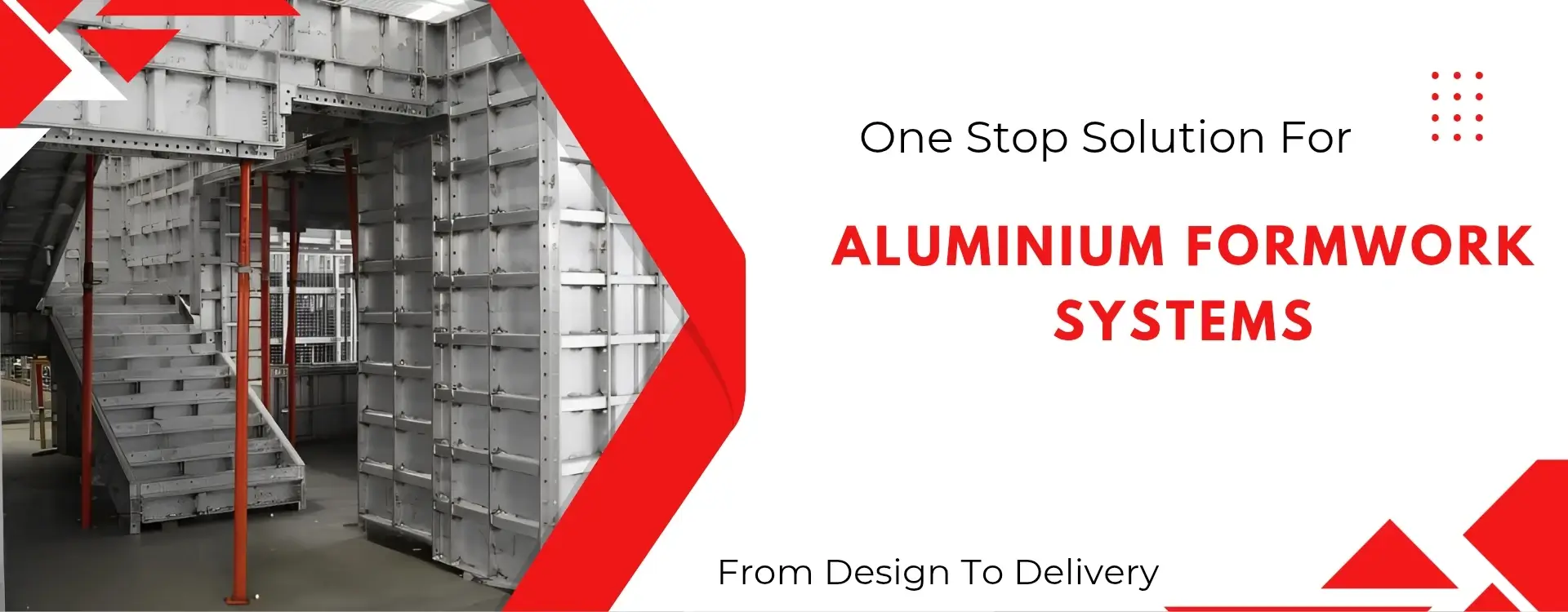
A complete system includes several types of panels and accessories engineered for strength and longevity:
Wall Panels – Form the vertical structural elements
Slab Panels – Support concrete slabs
Beam Panels – Shape horizontal beams
Deck Props – Support slab panels temporarily
Wall Ties – Maintain wall thickness
Pins and Wedges – Lock panels together securely
Soffit Panels – Create the underside of slabs
Corner Panels – Ensure accurate corners
Kickers – Support initial alignment
Alu-Beams and Brackets – Enhance stiffness
Each component is manufactured with strict tolerances to ensure perfect fit during assembly.
5. Advantages of Modern Aluminium Formwork Technology
5.1. Faster Construction Output
Reduced cycle times allow developers to meet deadlines, hand over units early, and improve overall project profitability.
5.2. Lightweight and Labour-Friendly
Panels can be installed without cranes, reducing labour fatigue and improving efficiency.
5.3. High Reusability
With 200–300+ reuses, the long-term cost per use becomes highly economical.
5.4. Superior Surface Finish
The smooth finish significantly cuts down on plastering, putty, and rework costs.
5.5. High Strength and Durability
Aluminium alloy offers excellent load-bearing capacity and corrosion resistance.
5.6. Suitable for High-Rise and Mass Housing
The system performs exceptionally well for repetitive structures like towers.
5.7. Cleaner and Safer Construction Sites
Reduced debris, faster removal of formwork, and precision alignment improve site safety and environmental hygiene.
5.8. Supports Green Building
Minimum waste, recyclable aluminium, and reduced timber usage contribute to sustainability.
6. Applications of Aluminium Formwork in Modern Building Projects
Aluminium formwork is widely used in:
Residential high-rises
Commercial towers
Mass housing schemes
Infrastructure housing (metros, smart city projects)
Luxury villa developments
Hotels and mixed-use buildings
It is especially preferred in countries with large housing demands such as India, UAE, Saudi Arabia, Qatar, and Southeast Asian regions.
7. Aluminium Formwork vs. Traditional Formwork Systems
| Feature | Aluminium Formwork | Timber Formwork | Steel Formwork |
|---|---|---|---|
| Speed | Very fast | Slow | Moderate |
| Reuses | 200–300 | 10–20 | 50–80 |
| Finish | Smooth, plaster-free | Rough | Good |
| Weight | Lightweight | Lightweight | Heavy |
| Cost Efficiency | High long-term | Low | Moderate |
| Labour Requirement | Low | High | High |
| Precision | High | Low | High |
Aluminium clearly stands out, especially for high-volume projects.
8. The Role of Modern Innovations in Aluminium Formwork Technology
Recent advancements have made aluminium formwork even more efficient.
8.1. CNC and Robotic Manufacturing
Precision panels produce better alignment and reduce site adjustments.
8.2. High-Grade Aluminium Alloys
Improved strength-to-weight ratio increases lifespan.
8.3. Improved Tie-Rod and Pin Systems
Faster locking mechanisms reduce assembly time further.
8.4. Integrated Safety Components
Built-in platforms, working decks, and guardrails enhance site safety.
8.5. Hybrid Formwork Systems
Aluminium combined with steel or plastic increases versatility.
9. Challenges & Considerations Before Using Aluminium Formwork
While highly beneficial, contractors must consider:
9.1. Higher Initial Investment
The upfront cost is higher than timber or steel. However, long-term reusability justifies it.
9.2. Skilled Training Required
Teams must understand panel arrangement, numbering, and cycle sequencing.
9.3. Project Suitability
Best results come from repetitive layouts and standard floor plans.
9.4. Proper Maintenance Needed
Regular cleaning, oiling, and storage extend panel life.
10. Why Developers and Contractors Prefer Aluminium Formwork Today
Developers choose this system because it:
Reduces project delays
Offers excellent return on investment
Delivers consistent quality
Supports large-scale production
Enhances structural integrity
Minimizes labour dependency
Enables sustainable building
In markets like India, Saudi Arabia, and UAE, aluminium formwork demand is growing rapidly due to massive housing requirements and skyscraper development.
11. Conclusion
Modern aluminium formwork technology is redefining how buildings are constructed. Its speed, precision, durability, and cost-effectiveness make it the ideal solution for developers seeking faster project delivery without compromising quality. With the rise of monolithic concrete construction and demand for high-rise buildings, aluminium formwork has become a cornerstone of modern engineering.
For construction companies, contractors, and developers aiming to stay competitive, adopting aluminium formwork is not just an option, it is a strategic necessity for the future of building.
What is modern aluminium formwork technology?
How does aluminium formwork speed up construction?
Is aluminium formwork suitable for high-rise buildings?
Does aluminium formwork reduce plastering work?