
In the fast-paced world of construction, scaffolding is more than just temporary support — it’s the foundation of safe and efficient work at height. Among the various scaffolding types available today, H-Frame Scaffolding stands out for its strength, simplicity, and versatility.
Whether you’re a builder, contractor, or project engineer, understanding the technical details, assembly process, and applications of H-Frame Scaffolding can make a major difference in both site safety and project efficiency.
This guide covers everything you need to know about H-Frame Scaffolding, including design, assembly tips, and best practices for optimal performance.
What is H-Frame Scaffolding?
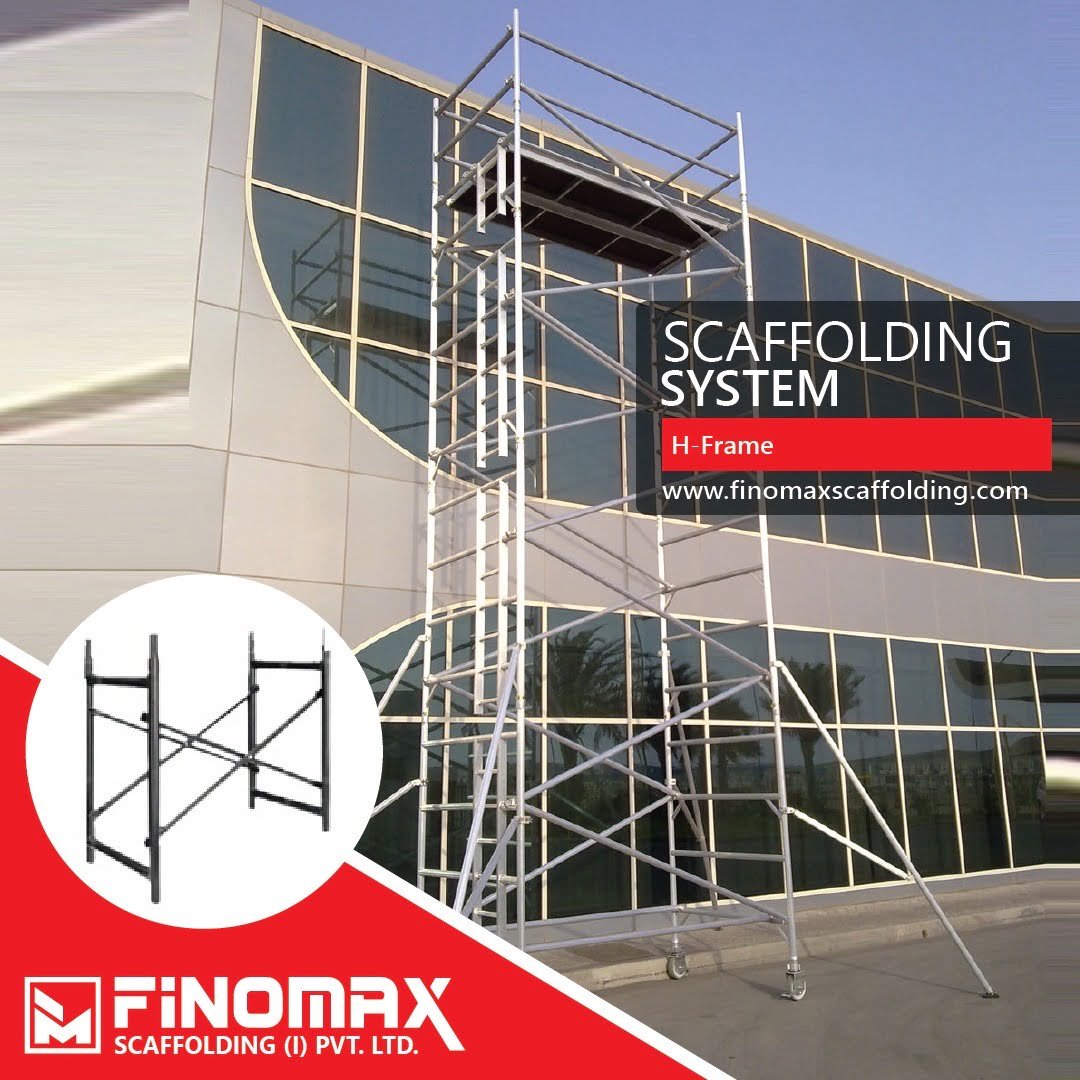
H-Frame Scaffolding — also known as Ladder Frame Scaffolding — gets its name from its distinctive “H”-shaped structure. It consists of vertical and horizontal frames connected by cross braces, forming a rigid and stable system.
This type of scaffolding is commonly used for plastering, painting, exterior finishing, maintenance, and general construction work where strong, easy-to-assemble platforms are needed.
Technical Components of H-Frame Scaffolding
A typical H-Frame Scaffolding system comprises several interconnected parts that ensure strength, stability, and load distribution.
Key Components Include:
-
- H-Frames:
The main load-bearing units made of high-strength steel tubes welded into an “H” shape for rigidity.
- H-Frames:
-
- Cross Braces:
Diagonal members that connect frames and prevent lateral movement.
- Cross Braces:
-
- Base Plates / Adjustable Jacks:
Provide a stable footing and allow height adjustment on uneven surfaces.
- Base Plates / Adjustable Jacks:
-
- Horizontal Braces / Ledgers:
Support working platforms and distribute loads evenly.
- Horizontal Braces / Ledgers:
-
- Walkway Planks:
Serve as safe working platforms for laborers and equipment.
- Walkway Planks:
-
- Couplers and Clamps:
Connect different scaffolding elements securely.
- Couplers and Clamps:
Assembly Tips: How to Install H-Frame Scaffolding Safely
Setting up H-Frame Scaffolding requires precision and adherence to safety guidelines. Follow these steps for a reliable and stable setup:
1. Site Preparation
-
- Clear debris and ensure a level base before installation.
-
- Use wooden sole plates or base plates to distribute load evenly.
2. Frame Setup
-
- Place the first two H-Frames vertically on base plates.
-
- Connect them with horizontal braces and cross braces to form a square frame.
3. Level and Secure
-
- Check alignment with a spirit level to ensure frames are plumb and square.
-
- Tighten all clamps and couplers firmly to avoid movement.
4. Add Additional Levels
-
- Stack more frames vertically, connecting them securely with joint pins.
-
- Install diagonal braces for additional rigidity.
5. Install Platforms
-
- Place walkway planks across the ledgers for a stable working surface.
-
- Add guardrails and toe boards for fall protection.
6. Final Safety Checks
-
- Inspect all joints, clamps, and braces.
-
- Verify that the scaffolding is stable before loading materials or allowing workers to climb.
Pro Tip:
Always follow manufacturer instructions and IS / EN standards for scaffold load capacity, spacing, and safety compliance.
Applications of H-Frame Scaffolding
Thanks to its versatility and strength, H-Frame Scaffolding is used in a wide range of construction activities.
1. High-Rise Building Construction
Ideal for exterior plastering, painting, and facade works at multiple levels.
2. Industrial Maintenance
Used in factories, refineries, and plants for repair and inspection tasks.
3. Bridge and Infrastructure Projects
Provides stable working platforms for elevated structures.
4. Residential Projects
Cost-effective for multi-story housing developments and smaller building sites.
5. Event and Temporary Structures
Can be adapted for temporary stands, platforms, and stage setups.
Its modular nature allows easy customization to suit different project heights, widths, and load requirements.
Advantages of H-Frame Scaffolding
Builders and contractors across the world prefer H-Frame Scaffolding for its simplicity, reliability, and adaptability. Whether used in residential construction, commercial complexes, or large-scale infrastructure projects, it consistently delivers safety, efficiency, and value.
Key Benefits Include:
Quick Assembly & Dismantling:
H-Frame systems are designed for easy handling and rapid setup. Their simple “H”-shaped design allows quick interlocking and vertical stacking, saving significant time and reducing labor costs during installation and dismantling.
High Load Capacity:
Engineered from high-tensile steel, these frames can safely support workers, tools, and heavy construction materials simultaneously. Their load-bearing capability makes them suitable for high-rise, industrial, and formwork applications.
Stable & Rigid Design:
The cross-braced framework provides excellent lateral stability, preventing swaying or vibration even under dynamic working conditions. This ensures worker safety and structural confidence at all times.
Versatile Applications:
H-Frame Scaffolding adapts easily to multiple uses — from exterior plastering, painting, and cladding to bridge construction and industrial maintenance. Its modular system can be customized for different heights and layouts.
Reusable & Durable:
Manufactured using galvanized steel, H-Frame Scaffolding offers long service life, rust resistance, and minimal maintenance needs. Each component can be reused multiple times, providing a strong return on investment.
Precision Alignment:
Uniform frame dimensions ensure perfect vertical and horizontal alignment, helping maintain structural balance and improving on-site accuracy for construction and finishing works.
Weather & Corrosion Resistance:
Finomax H-Frames are treated with anti-rust coatings or hot-dip galvanization, ensuring excellent performance in harsh weather conditions — from humid coastal sites to dry, dusty regions.
Reduced Labor Dependency:
Because the system is modular and easy to assemble, it requires less skilled labor, which minimizes manpower costs and simplifies site logistics.
Enhanced Worker Safety:
Equipped with firm lock mechanisms, sturdy platforms, and optional guardrails, H-Frame scaffolding ensures maximum worker protection during construction and maintenance activities.
Cost-Effective for Large Projects:
Given their reusability, low maintenance, and long lifespan, H-Frame systems provide one of the most economical scaffolding solutions available, especially for long-term or repetitive-use projects.
Ease of Transportation & Storage:
The frames are lightweight, stackable, and compact, making them convenient to transport and store between projects without taking up excessive space.
Compatibility with Formwork Systems:
H-Frames integrate seamlessly with Finomax Aluminium Formwork and other shuttering systems, ensuring uniformity across your entire construction setup.
Reduced Project Downtime:
Fast setup and dismantling, combined with durable construction, mean fewer interruptions and faster project turnover — keeping your construction schedule on track.
Safety Tips for Using H-Frame Scaffolding
Safety should never be compromised when working at height. Even the most durable scaffolding system requires proper handling, inspection, and supervision to ensure worker protection and structural stability. Follow these essential safety guidelines to maintain secure and efficient scaffolding operations:
-
- Inspect Before Every Use:
Examine frames, braces, couplers, and base plates for cracks, rust, or deformation before assembly. Damaged components must be replaced immediately.
- Inspect Before Every Use:
-
- Avoid Overloading Platforms:
Never exceed the scaffolding’s rated load capacity. Consider the combined weight of workers, tools, and materials while planning load distribution.
- Avoid Overloading Platforms:
-
- Ensure a Stable Foundation:
Install scaffolding on a firm, level surface using base plates or sole plates. Avoid soft or uneven ground that may cause sinking or tilting.
- Ensure a Stable Foundation:
-
- Use Guardrails and Toe Boards:
Always install guardrails, mid-rails, and toe boards on all open sides to prevent accidental falls or slipping of tools and materials.
- Use Guardrails and Toe Boards:
-
- Keep Platforms Clear:
Maintain clutter-free working areas by removing excess tools, materials, or debris that can obstruct movement or cause trips.
- Keep Platforms Clear:
-
- Train All Workers Properly:
Only trained and competent personnel should assemble, use, or dismantle scaffolding. Conduct refresher training regularly to ensure compliance with safety standards.
- Train All Workers Properly:
-
- Conduct Regular Site Inspections:
Have a qualified supervisor perform routine checks during use, especially after strong winds, heavy rain, or material loading.
- Conduct Regular Site Inspections:
-
- Use Proper Access Ladders:
Provide secure access ladders or stairways to reach working platforms safely. Avoid climbing frames or braces.
- Use Proper Access Ladders:
-
- Secure All Connections Firmly:
Double-check that all clamps, couplers, and braces are locked tightly to prevent movement or collapse under load.
- Secure All Connections Firmly:
-
- Maintain Adequate Distance from Power Lines:
Keep scaffolding at least 3–5 meters away from electrical lines to prevent electrocution risks.
- Maintain Adequate Distance from Power Lines:
-
- Install Safety Nets or Harness Systems:
Use personal fall arrest systems (PFAS) like safety harnesses or nets for workers operating at significant heights.
- Install Safety Nets or Harness Systems:
-
- Avoid Modifications During Use:
Do not move or alter scaffolding while it is occupied or under load. All modifications should be done only after the system is unloaded and cleared.
- Avoid Modifications During Use:
-
- Ensure Weather Safety:
Avoid using scaffolding during storms, heavy rain, or strong winds. Wet or icy surfaces can lead to dangerous slips and instability.
- Ensure Weather Safety:
-
- Mark Restricted Areas:
Clearly barricade or mark the area around scaffolding to prevent unauthorized entry or accidental collisions with vehicles or equipment.
- Mark Restricted Areas:
-
- Follow Load Distribution Rules:
Distribute weight evenly across platforms to avoid structural imbalance. Concentrated loads on one side can cause tipping or damage.
- Follow Load Distribution Rules:
-
- Regular Maintenance and Storage:
After dismantling, clean all components and store them in a dry, organized area to prevent corrosion and extend service life.
- Regular Maintenance and Storage:
Why Choose Finomax H-Frame Scaffolding
At Finomax, we design and manufacture high-quality H-Frame Scaffolding systems that combine safety, durability, and performance.
What Sets Finomax Apart:
-
- Heavy-duty frames built from premium-grade steel.
-
- Precision-engineered components for easy assembly.
-
- Hot-dip galvanized finish for corrosion resistance.
-
- Compatible accessories and modular design.
-
- Compliant with IS and international safety standards.
Finomax scaffolding systems are trusted by builders, contractors, and developers across India, the Middle East, and global markets for their reliability and reusability.
Conclusion: Building with Strength, Stability, and Safety
H-Frame Scaffolding remains a cornerstone of safe construction practices. Its technical simplicity, adaptability, and robustness make it an essential system for builders aiming to achieve efficiency and safety on site.
With Finomax H-Frame Scaffolding, you get more than just equipment — you get a system built on engineering excellence, quality assurance, and trust.
Choose Finomax for your next project and experience scaffolding that’s built to last.

It provides superior strength and stability while allowing quick assembly, making it ideal for high-rise and industrial projects.
Yes. Using adjustable base jacks or sole plates ensures proper leveling and safety even on uneven ground.
With proper maintenance and storage, high-quality galvanized steel H-Frames from Finomax can last for years, offering excellent return on investment.




One Response
Solid article! Thinking about bankroll management & responsible gaming is key, especially with platforms like ibeth app casino ensuring compliance. Good to see legal frameworks prioritized for players in the Philippines!