
High rise construction projects demand scaffolding systems that deliver speed, safety, and load bearing reliability. Among modular scaffolding options, Cuplock and Ringlock are the most widely used systems for tall structures. Choosing the right one directly impacts erection time, labor efficiency, site safety, and overall project cost.
This SEO focused guide compares Cuplock vs Ringlock scaffolding systems to help contractors, developers, and project managers select the best solution for high rise construction.
Understanding Modular Scaffolding Systems
Modular scaffolding systems use prefabricated steel components that connect through standardized locking mechanisms. Compared to conventional tube and coupler scaffolding, modular systems offer faster installation, improved safety, and better structural stability.
Cuplock and Ringlock are both modular systems, but they differ significantly in design, flexibility, and application.
What Is Cuplock Scaffolding
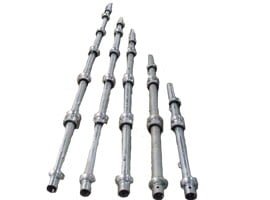
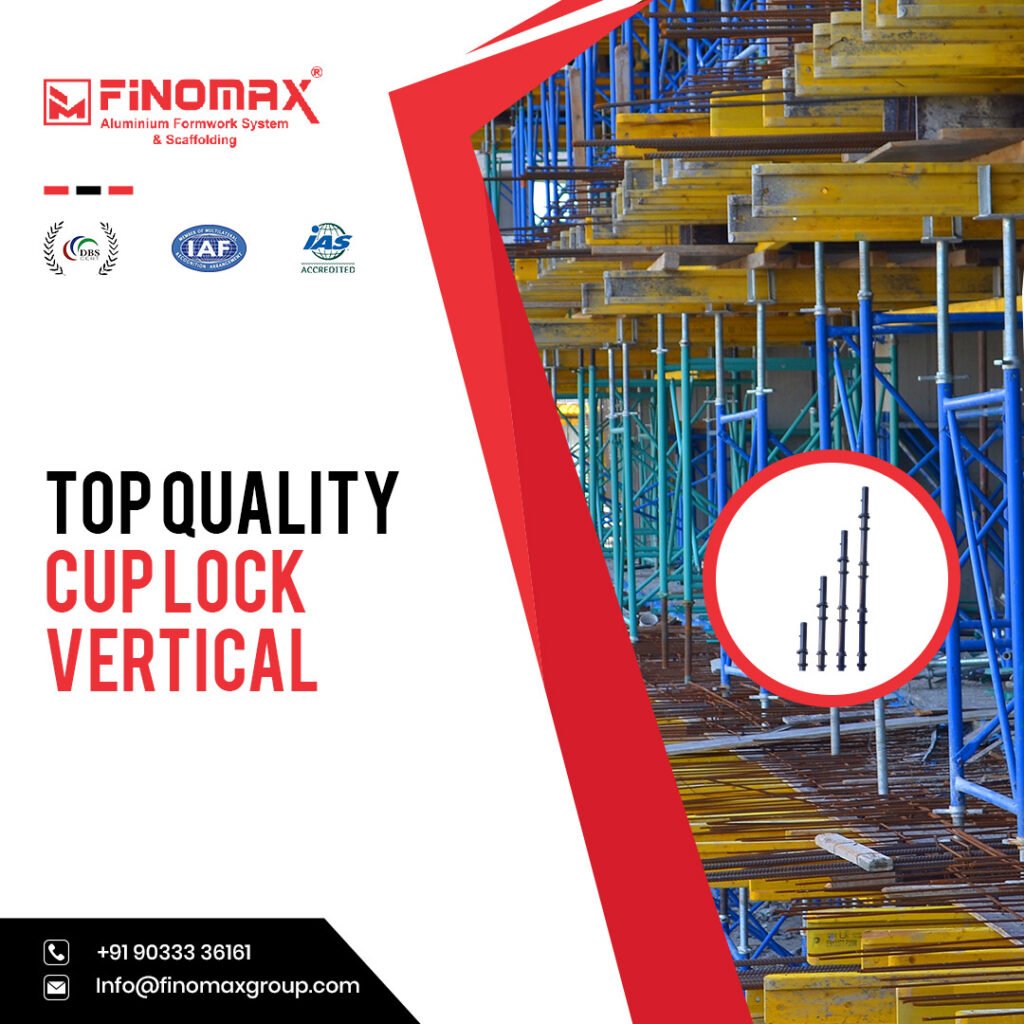
Cuplock scaffolding uses vertical standards with fixed bottom cups and sliding top cups. Horizontal ledgers and diagonal braces are locked in place by tightening the top cup, forming a rigid joint.
Key characteristics:
Cup and blade locking mechanism
Fixed ledger connection points
Fast assembly for repetitive structures
Commonly used in slab support and access scaffolding
Cuplock is known for simplicity and speed in projects with uniform layouts.
What Is Ringlock Scaffolding
Ringlock scaffolding uses vertical standards with circular rosettes welded at regular intervals. Ledgers, braces, and accessories connect to the rosette using wedge pins, allowing multiple connections at one node.
Key characteristics:
Rosette based multi directional connections
High flexibility in layout design
Suitable for complex geometries
Strong load distribution across joints
Ringlock is preferred where adaptability and structural complexity are required.
Cuplock Scaffolding
Limited connection angles
Best suited for straight and repetitive structures
Less adaptable to curved or irregular shapes
Ringlock Scaffolding
Multiple connection angles from a single rosette
Easily adapts to complex building profiles
Ideal for irregular elevations and façade work
Ringlock offers greater design flexibility, especially in high rise buildings with architectural variations.
Speed of Installation and Labor Efficiency
Cuplock
Faster learning curve for labor
Quicker erection in simple layouts
Fewer components reduce handling time
Ringlock
Slightly longer setup time initially
Faster execution in complex scaffolding zones
Reduced rework due to flexible connections
For repetitive floor cycles, Cuplock is often faster. For mixed or complex elevations, Ringlock saves time overall.
Load Capacity and Structural Performance
Both systems are engineered for heavy duty applications, but performance differs by design.
Cuplock
Excellent vertical load bearing capacity
Commonly used for slab and beam support
Performs best under uniform loading
Ringlock
Superior load distribution through rosette joints
Handles multi directional loads efficiently
Better performance in cantilever and façade scaffolding
For high rise construction involving external access and façade work, Ringlock offers higher structural versatility.
Safety and Site Stability
Safety is a major concern in high rise projects.
Cuplock Safety Features
Rigid node connections
Stable vertical alignment
Suitable for controlled access platforms
Ringlock Safety Features
Multiple tie and brace connection options
Strong resistance to lateral forces
Better adaptability to wind loads
Ringlock provides enhanced safety in exposed high rise environments due to its multi directional bracing capability.
Cost Considerations for High-Rise Projects
Lower initial material cost
Reduced labor cost for simple layouts
Cost effective for large repetitive projects
Higher initial investment
Lower modification and rework costs
Better long term value for complex structures
Project design complexity should guide cost decisions rather than upfront price alone.
Best Use Cases in High-Rise Construction
Choose Cuplock Scaffolding When
Building design is repetitive and uniform
Primary requirement is slab and beam support
Speed and cost efficiency are top priorities
Choose Ringlock Scaffolding When
Project involves complex geometry or façade access
Multiple working levels and angles are required
Higher safety and adaptability are critical
Cuplock vs Ringlock: Final Comparison Summary
| Factor | Cuplock Scaffolding | Ringlock Scaffolding |
|---|---|---|
| Installation Speed | Faster for simple layouts | Faster for complex layouts |
| Design Flexibility | Limited | High |
| Load Handling | Strong vertical loads | Multi directional loads |
| Safety in High Rise | Good | Excellent |
| Cost Efficiency | Better for repetitive work | Better for complex projects |
Conclusion
Both Cuplock and Ringlock scaffolding systems are proven solutions for high rise construction. Cuplock is ideal for speed driven, repetitive structures, while Ringlock excels in flexibility, safety, and complex architectural requirements.
For high rise projects with varying elevations and façade access needs, Ringlock scaffolding delivers superior performance. For straightforward vertical construction, Cuplock remains a cost effective and efficient choice.
Ringlock scaffolding is generally better for high-rise construction with complex elevations and façade access due to its multi directional connections and higher adaptability. Cuplock works well for repetitive and straight structures.
Cuplock scaffolding is faster to install for simple and repetitive layouts because of its fixed connection points. Ringlock may take slightly longer initially but saves time in complex structures by reducing modifications.
Ringlock scaffolding provides better safety for tall buildings as it allows more bracing options and improved resistance to lateral and wind loads, making it suitable for exposed high-rise environments.
